“You will not die on the continent”
The Wind-Up Bird Chronicle“You will not die on the continent” is Corporal Honda’s prediction to Lieutenant Mamiya during a wartime expedition, and later the thought Mamiya clings to when he is trapped in a desert well. Its significance lies in the change wrought by repetition: first an unexplained claim about Mamiya’s future, it becomes a reason to believe survival remains possible, then a statement confirmed by the life he has lived.
The prediction
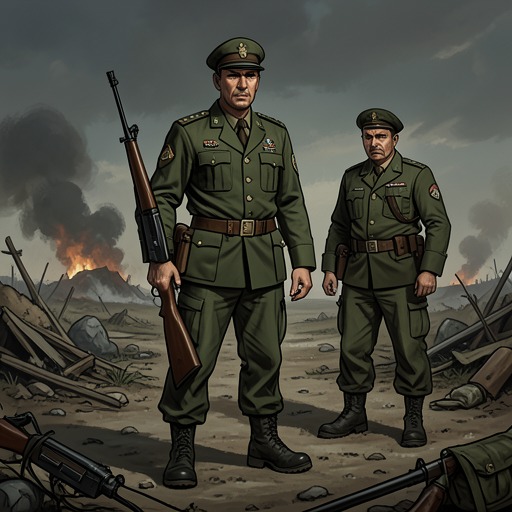
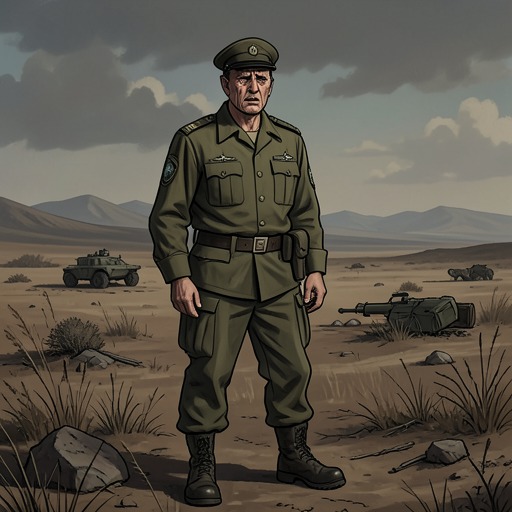
As the four men speak in the desert, Honda’s answer to Mamiya carries a note of uncertainty that troubles his companion. Mamiya presses him to speak plainly, telling him this may be their last conversation. Honda, visibly wrestling with conflicting feelings, says that Mamiya will outlive the others by far and die in Japan. Asked how he can know, Honda cannot explain it; he says only that he knows.
Mamiya asks whether Honda is psychic. Honda denies having a complete understanding of what he knows, and counsels that a person’s destiny is something to look back on after it has passed, not something to see in advance. When Mamiya returns to the question of whether he will die there, Honda makes the prediction more specific: Mamiya will not die on the continent. He then falls silent, absorbed in his thoughts and staring across the prairie. Mamiya goes back to the tent and sleeps.
A promise carried into danger
Later, Mamiya is taken north on horseback, tied to the saddle and unable to know what his captors intend. He recalls the Russian officer’s statement that he will not be killed, but cannot make sense of it; survival still seems almost impossible. Against that uncertainty, Honda’s words return with force. Mamiya deliberately attends to the way Honda spoke and resolves to believe the prediction: he will not die in this place, and he will return to his native soil.
The men stop at a desert devotional mound, where they untie Mamiya and lead him to a well. They make him look into its darkness, and a soldier drops a stone to establish that it is deep and dry. At this point, the prophecy is no longer an abstract forecast. Mamiya has reason to fear that he has been brought to a place from which he may not emerge, so Honda’s assurance becomes the concrete possibility around which he organizes his hope.
The well and the return of the prophecy
During his confinement, Mamiya experiences an overwhelming light, followed by the return of the well’s darkness and cold. He is left unable to act or even to feel his physical existence. In that state, Honda’s prediction returns to his mind. Mamiya reasons that he has been unable to die in a place and at a time when he believes he should have died. The prediction shifts in meaning: it is not merely that he will not die on the continent; he feels that he cannot die there.
That conviction carries a cost. Mamiya tells his listener, Mr. Okada, that whatever grace he may have experienced before that moment is lost forever. The prophecy thus does not promise a simple rescue or undo the suffering of the well. It gives Mamiya a way to understand his continued existence, while leaving intact the lasting loss he associates with the experience.
Confirmation and narrative meaning
As he finishes recounting the ordeal, Mamiya looks at his watch and points to the present: he is alive, just as Honda said he would be. He adds that, of the four men who went on the expedition, he has lived the longest. The ending makes Honda’s initially inexplicable knowledge legible through hindsight, echoing his own distinction between seeing destiny in advance and looking back after it has occurred.
The words recur at a turning point in Mamiya’s account: they move from Honda’s guarded assertion, to Mamiya’s chosen belief while in captivity, to a retrospective confirmation addressed to Mr. Okada. Their force comes not from an explanation of Honda’s knowledge, which remains absent, but from the way Mamiya uses the prediction to resist despair and later measures his survival against it. The phrase is both a forecast of return to Japan and the thread by which Mamiya narrates his survival without claiming that survival restored what the ordeal took from him.